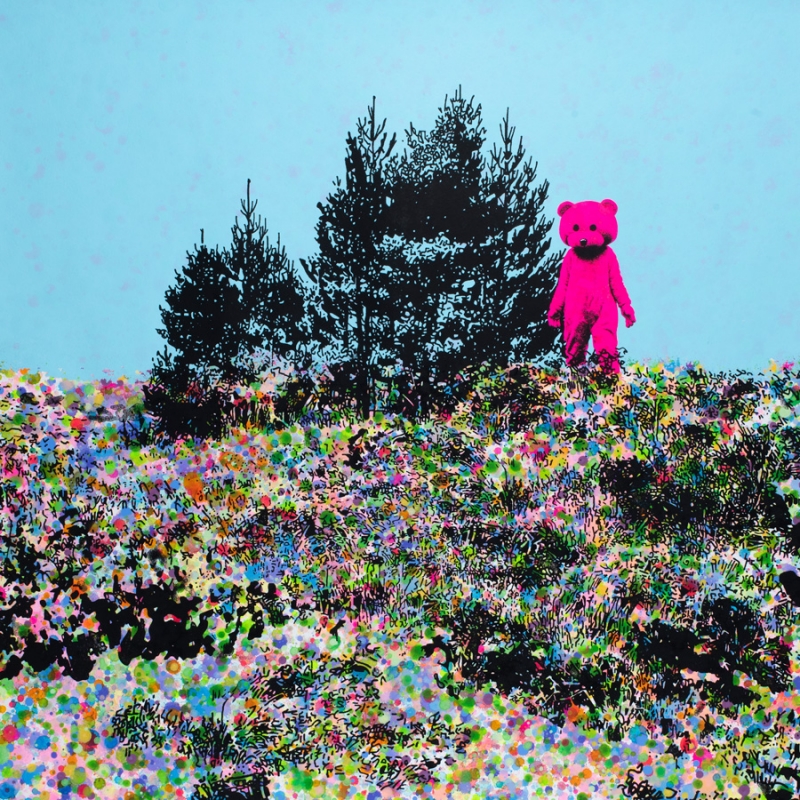
Mental health runs through LUAP’s practice not as a separate subject, but as a way of understanding how experience is internalised, remembered and given form. Therapy played a formative role in the emergence of The Pink Bear, while earlier works such as Lone Soldiers had already begun to use landscape, trees and recurring imagery as ways of approaching psychological states indirectly.
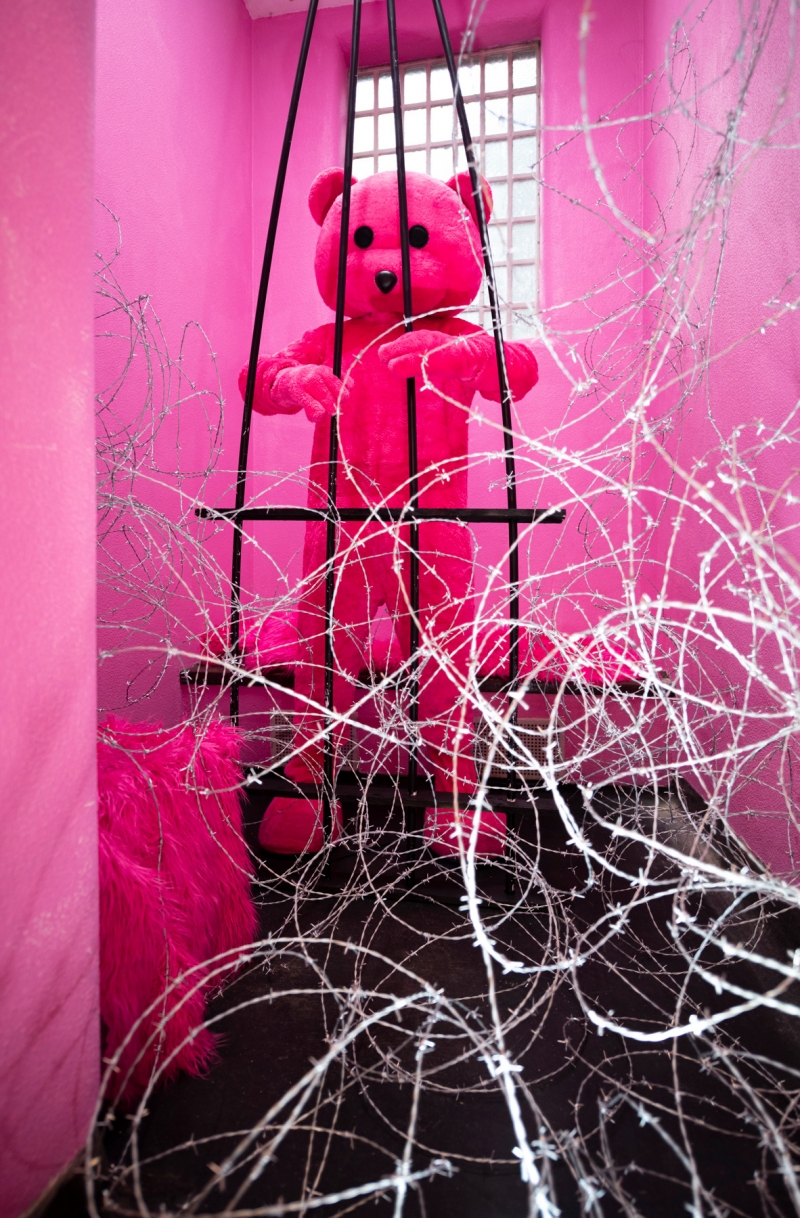
That interest continues across works dealing with isolation, self-perception, vulnerability and the structures people build around themselves. In Self Incarceration, escape is visibly possible yet psychologically complicated, while Life Lines turns portraiture toward personal histories, relationships and the objects through which people construct a sense of self.
Rather than illustrating mental health literally, LUAP’s work allows emotional experience to remain unstable and unresolved. Painting, Photography, Sculpture, Performance and Installation become ways of externalising states that are often difficult to articulate, creating a space in which private experience can be encountered through image, material and form.
Happiful
LUAP features in Happiful’s Good News Stories to Make You Smile, tracing The Pink Bear back to a positive childhood memory reconnected with during therapy and its later development across Painting and Photography.
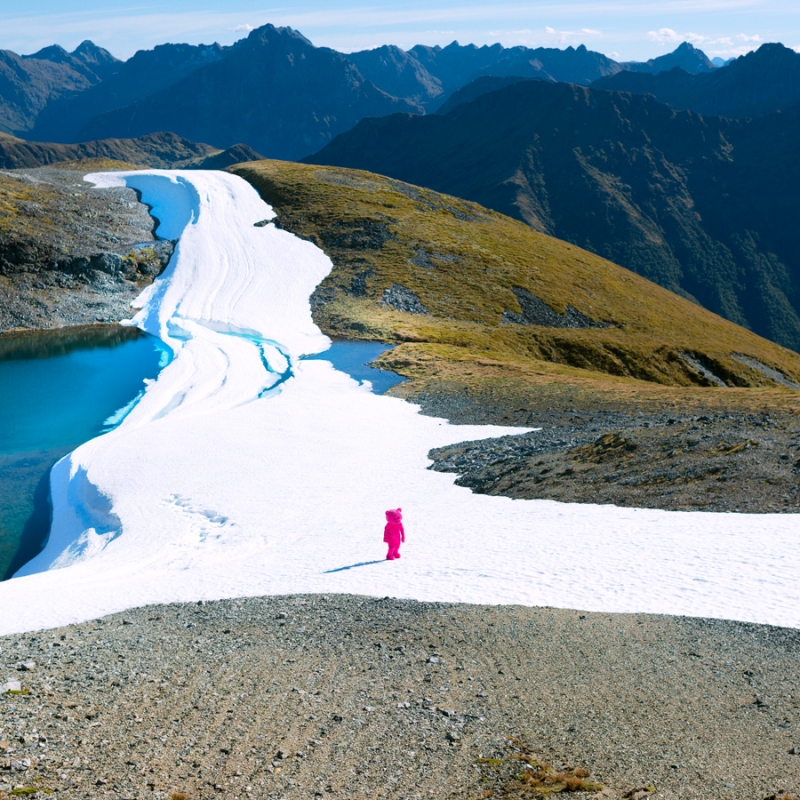
LUAP is named HUNGER’s MVP of the Week, with new Photography placing The Pink Bear within Britain’s snow-covered landscapes and bringing together themes of mental health, reflection and the natural world.
LUAP features in Ham & High’s coverage of Open Cells at the former Hampstead Police Station, where The Pink Bear is placed inside one of the building’s original cells to explore mental health, isolation and psychological confinement.
LUAP speaks with Creative Boom about The Pink Bear, mental health and the role of travel within his practice, tracing the figure from a memory recovered during therapy to Photography made in remote landscapes and large-scale Painting.
LUAP and The Pink Bear appear on the cover of ArtDog Istanbul’s November–December 2022 issue, with a feature exploring mental health, recovery, climate, ecology and loneliness across his Painting, Photography and Installation.
LUAP speaks with London Daily News about the personal history behind The Pink Bear, the role of travel and Photography within his practice, and preparations for an ambitious horseback expedition through western Mongolia.
LUAP features in Art Plugged ahead of an intimate conversation with curator Vestalia Chilton at The Exhibitionist Hotel, exploring The Pink Bear, Painting, mental health and his recent horseback expedition through Mongolia.
LUAP features in MyLondon in a profile tracing The Pink Bear from a childhood memory and a difficult period in his life to an international Photography practice built around travel, adventure and exploration.
LUAP features in Yahoo! Style in a profile tracing The Pink Bear from a childhood memory rediscovered during therapy to an international practice spanning Photography and large-scale Painting.
LUAP appears on the cover of Blow Out Magazine for an interview exploring The Pink Bear, adventure, mental health and the relationship between Photography, Painting and travel within his practice.
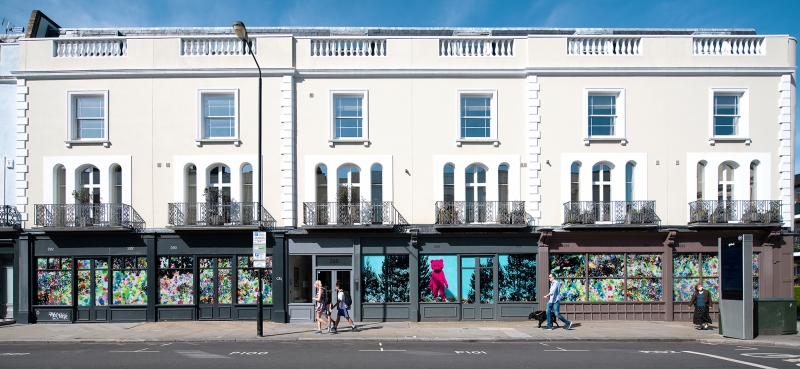
LUAP’s Good Vibrations Public Art Installation in Notting Hill is featured by Art Daily, exploring isolation, mental health and the restorative role of nature through the recurring figure of The Pink Bear.
LUAP’s Good Vibrations Public Art Installation takes over the former AllSaints storefront on Westbourne Grove, with Made In Shoreditch exploring the work’s relationship with mental health, isolation and connection.
LUAP’s Good Vibrations Public Art Installation on Westbourne Grove is featured by London Post, exploring mental health, isolation and the restorative role of nature through The Pink Bear.
LUAP’s I’m Glad I Found You series is featured by Made In Shoreditch, bringing together unseen Paintings completed during lockdown after the exhibition they were intended for was cancelled by the COVID-19 pandemic.