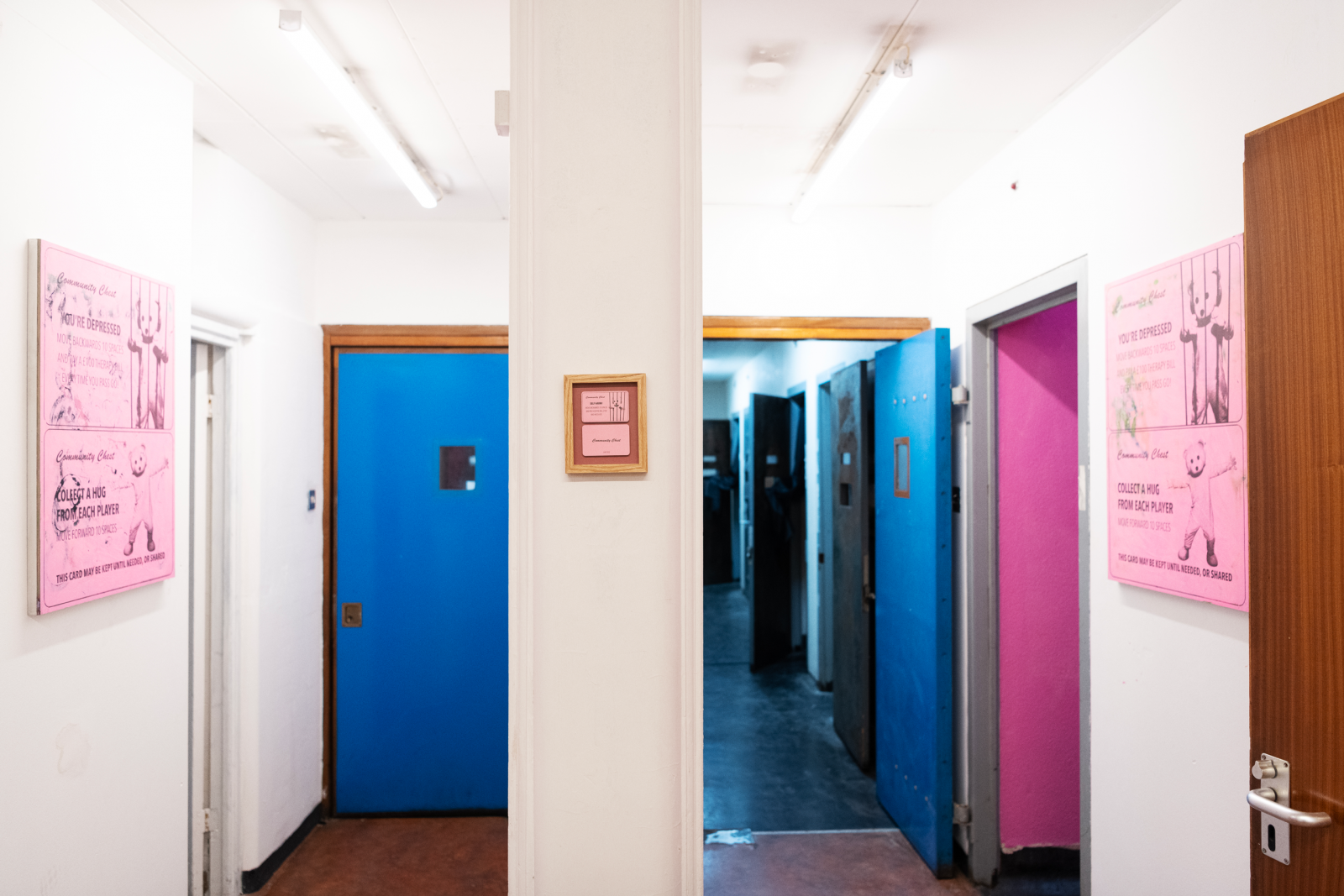
Self Incarceration (2022) examines the psychological conditions of confinement through an Installation developed within the former holding cells of Hampstead Police Station, London. Presented as part of The Koppel Project's OPEN CELLS residency, LUAP brought together Sculpture, Painting and Print to explore what he describes as human caged potential. The work considers how fear, trauma and internal states can restrict a person's sense of possibility, even when the conditions for freedom appear to exist.
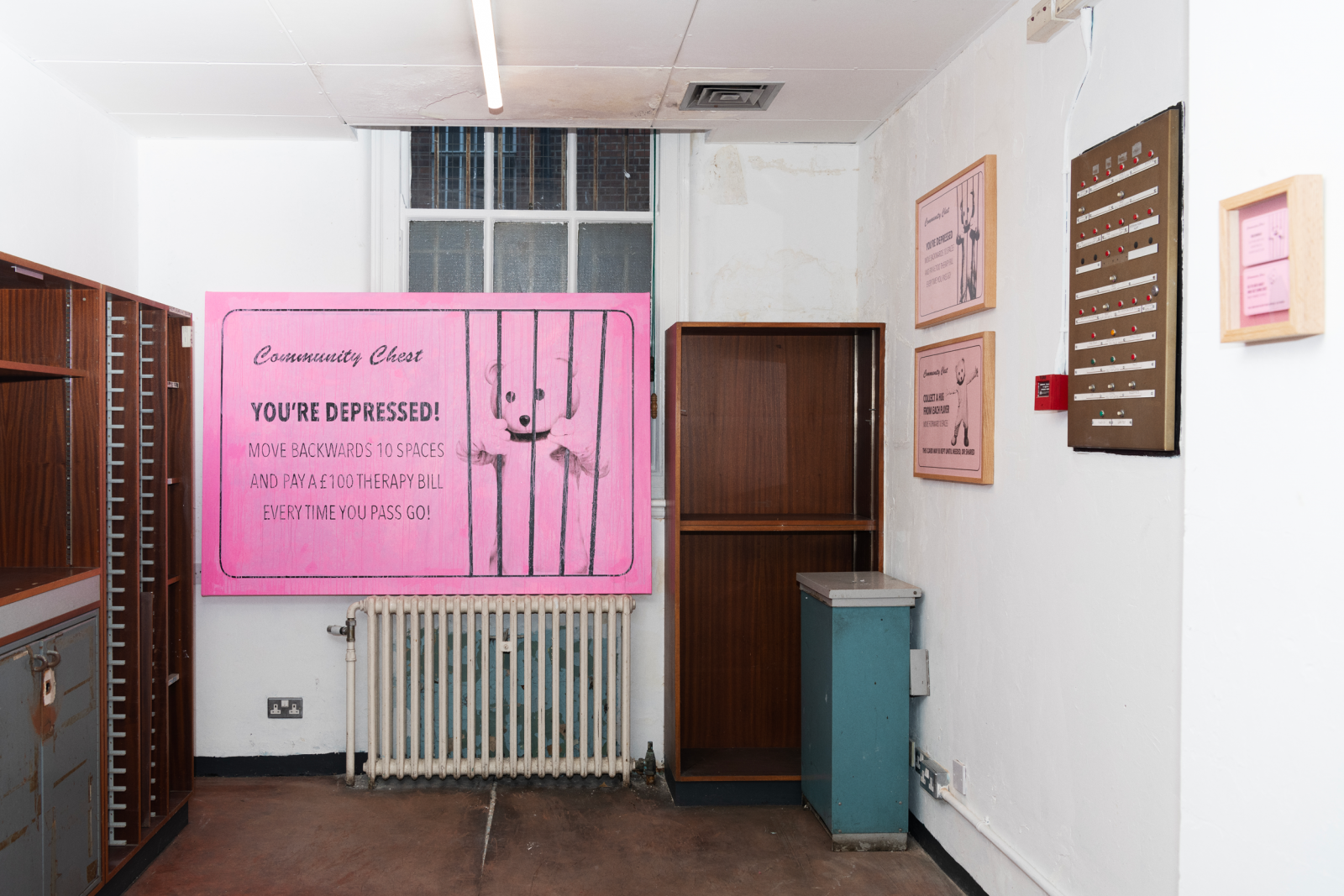
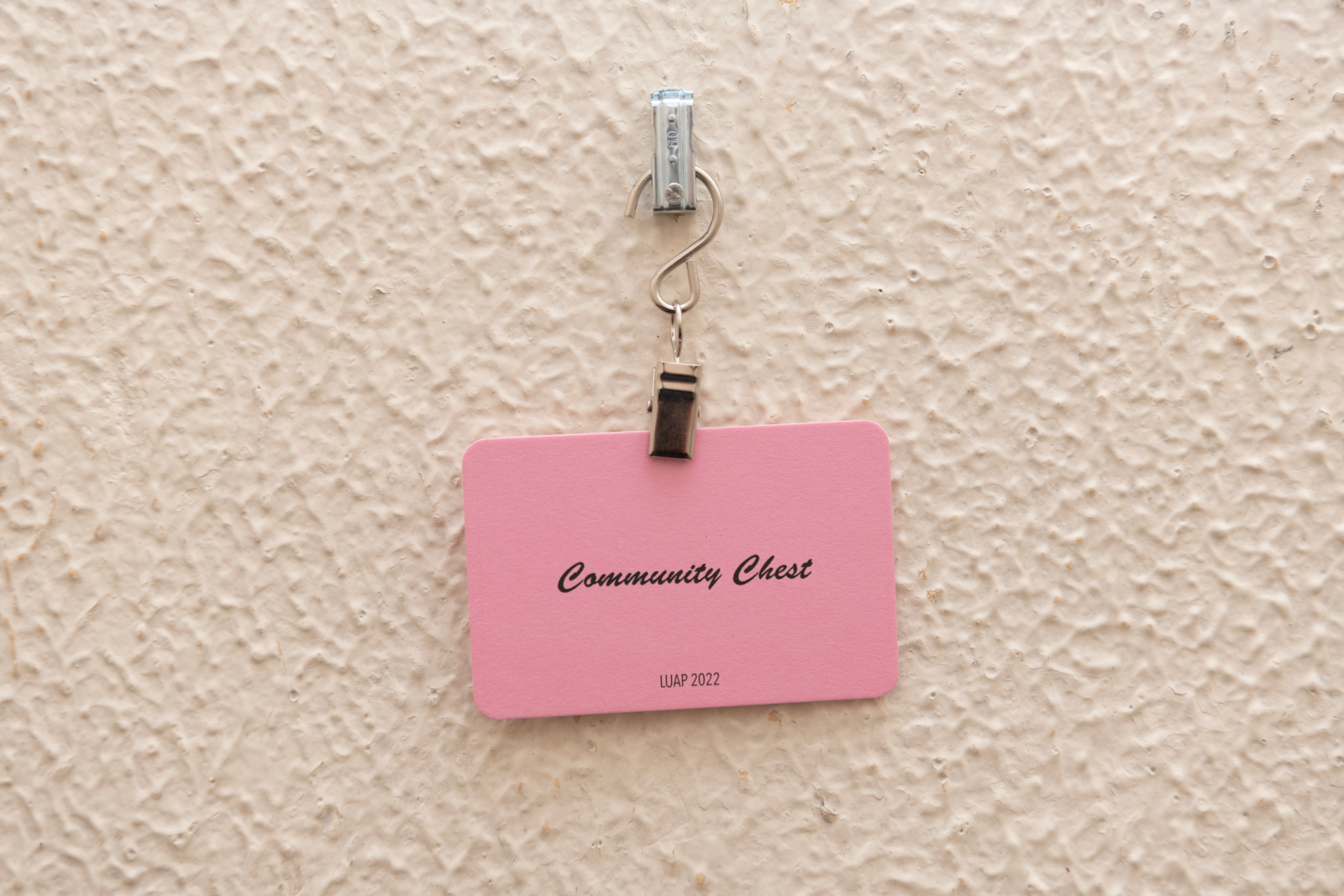
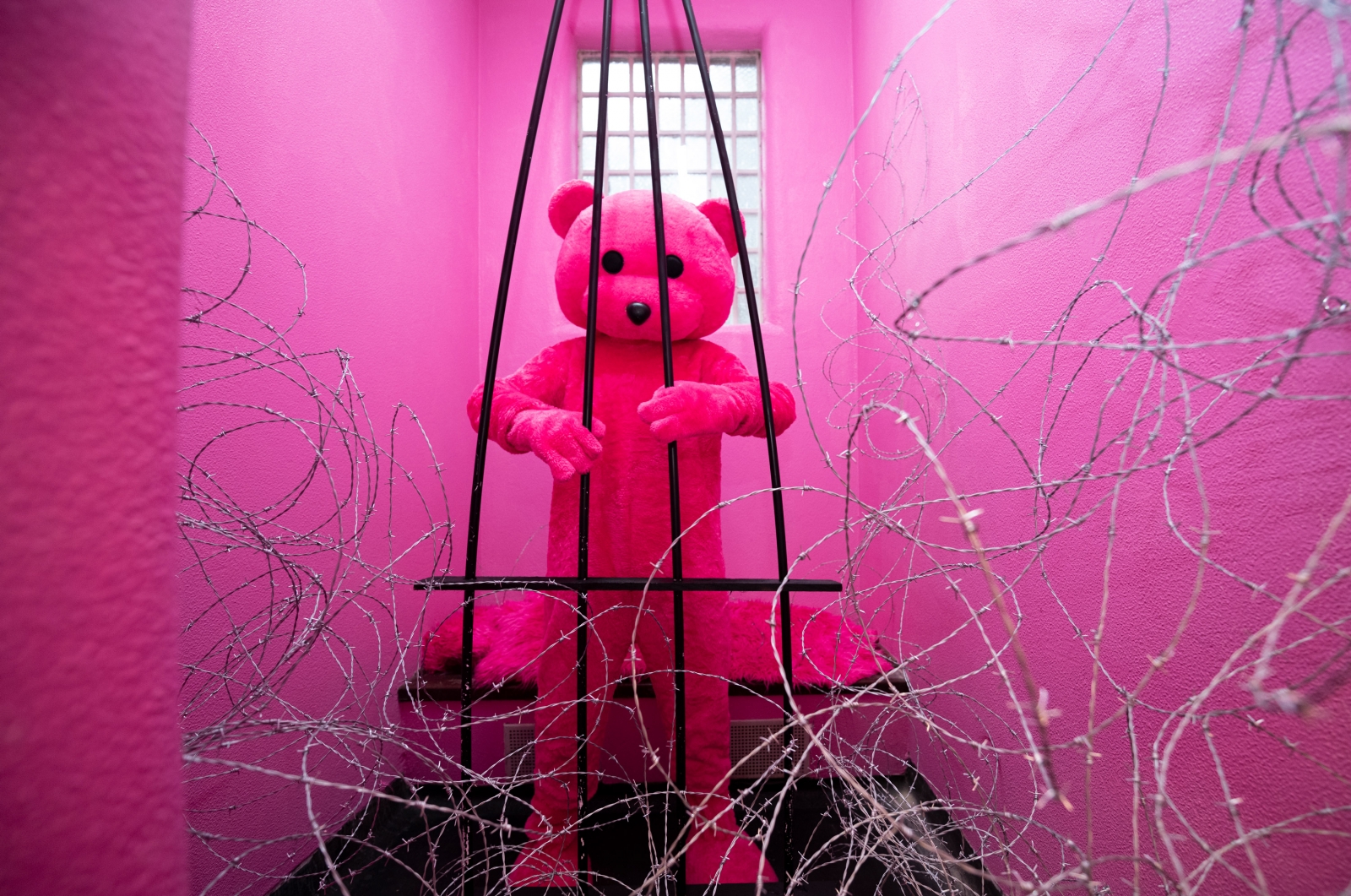
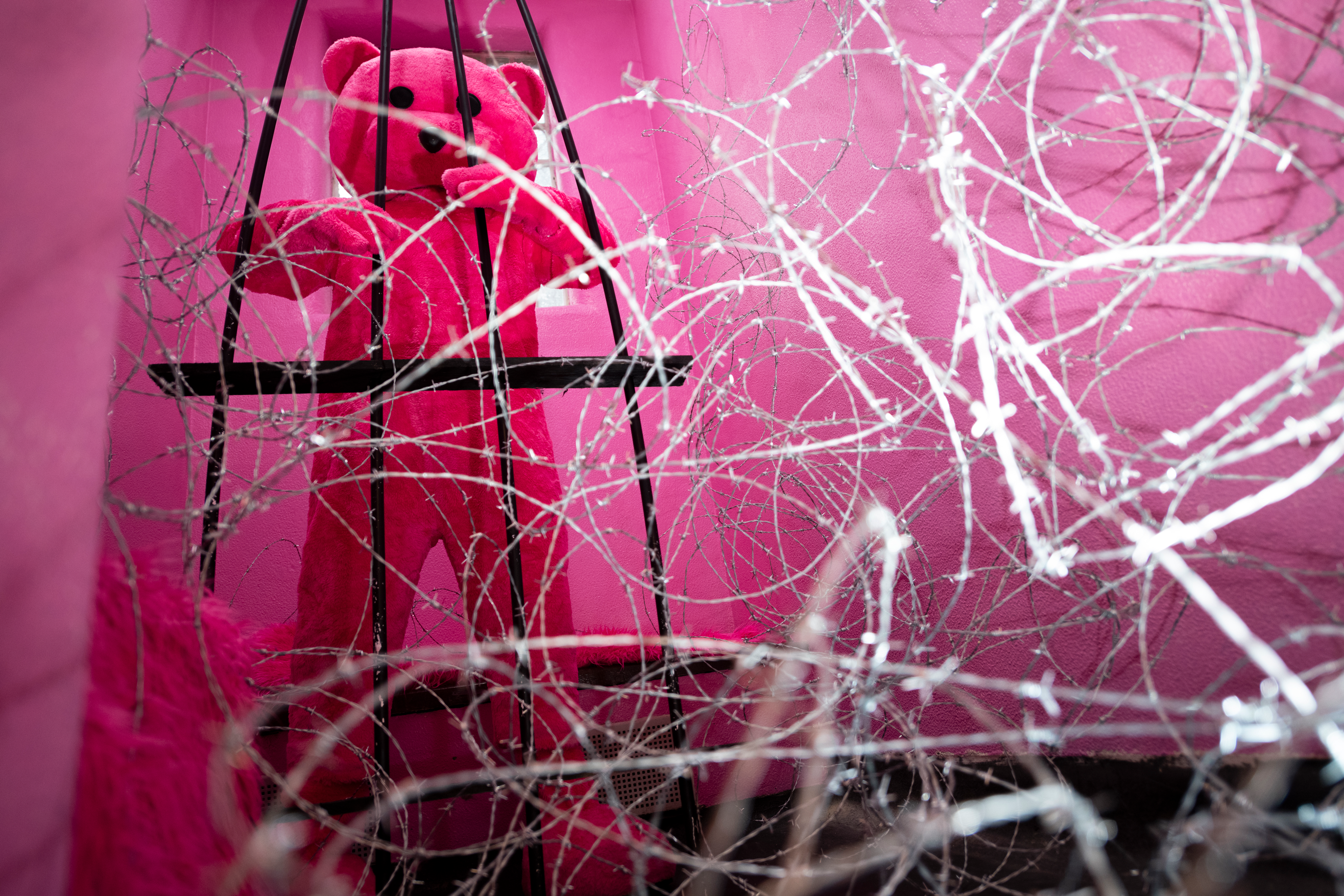
At the centre of the Installation, The Pink Bear stands within a pink-painted cell holding a cage, its entrance obstructed by barbed wire while the door remains open. Elsewhere, Community Chest Cards translate experiences of depression, anxiety and human connection into the language of a board game, while original Paintings and Screen Prints occupy the former control room. Together, the works examine the relationship between psychological restriction, personal agency and the unpredictable circumstances through which people navigate their lives.
The former police station provided an architectural setting in which the distinction between physical and psychological confinement could be examined directly. Working within the building's original holding cells, LUAP retained the structural elements associated with detention while introducing materials drawn from the visual world of The Pink Bear. The cell was painted pink, with fur covering the existing bed, transforming an institutional environment into a space that appeared simultaneously protective and restrictive. For LUAP, the colour evokes the interior of the mind, suggesting a place of refuge that can also become a source of confinement.
The central Sculpture presents The Pink Bear holding a cage within a space already defined by bars and enclosure. The accumulation of physical barriers gives form to the idea of human caged potential, in which emotional experiences can limit an individual's ability to act upon opportunities that remain available to them. The open cell door is central to this contradiction. Although an exit exists, the surrounding obstacles and the psychological associations of the space complicate the relationship between freedom and the ability to exercise it.
Material plays a direct role in establishing this tension. The softness of The Pink Bear and its familiar pink surroundings contrast with the uncompromising physical presence of steel and real barbed wire. During the construction of the Installation, working with the wire repeatedly scratched and cut LUAP, recalling an earlier period of self-harm. The material therefore carried a personal association beyond its immediate function as a barrier, connecting the physical experience of making the work with the psychological territory it explores.
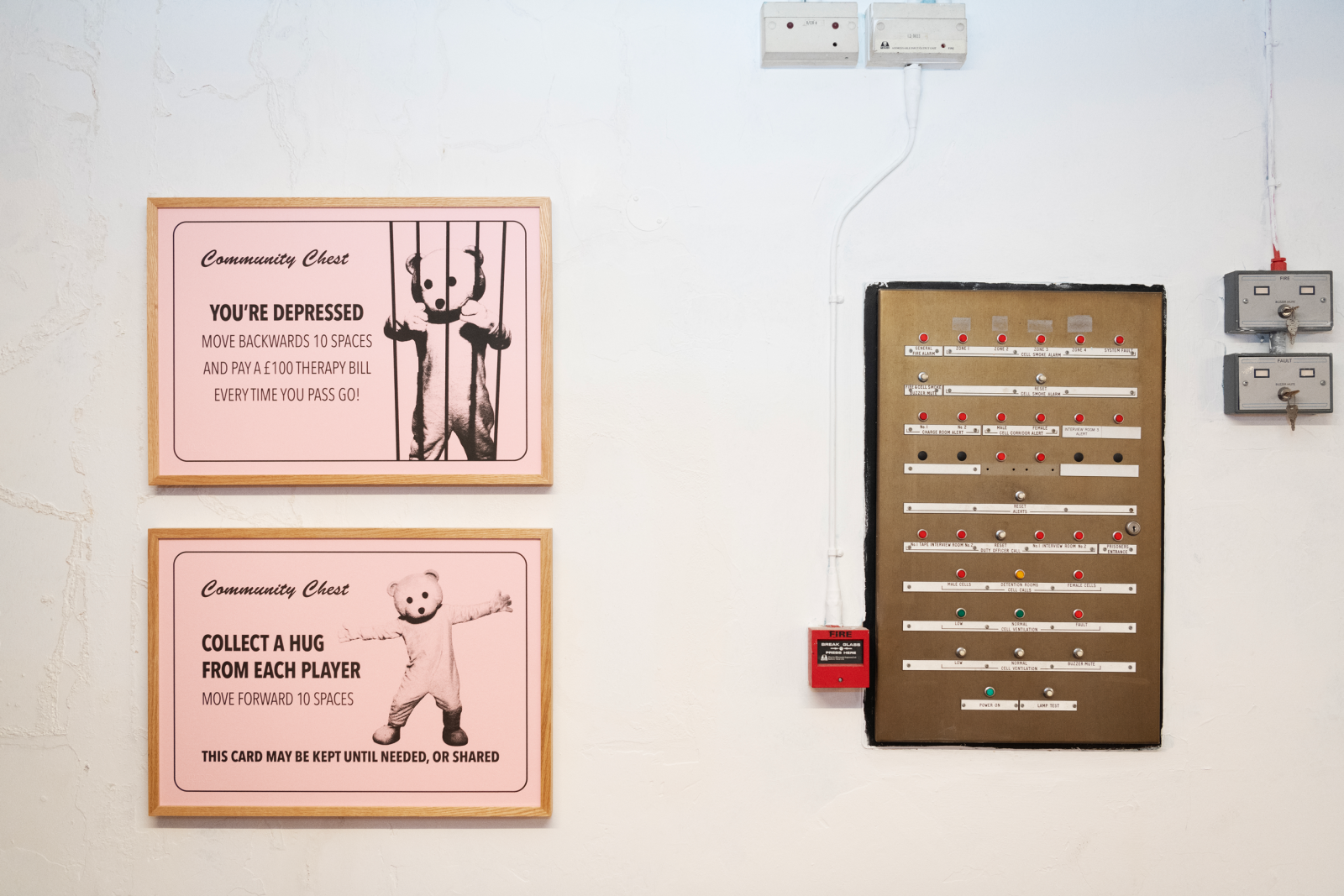
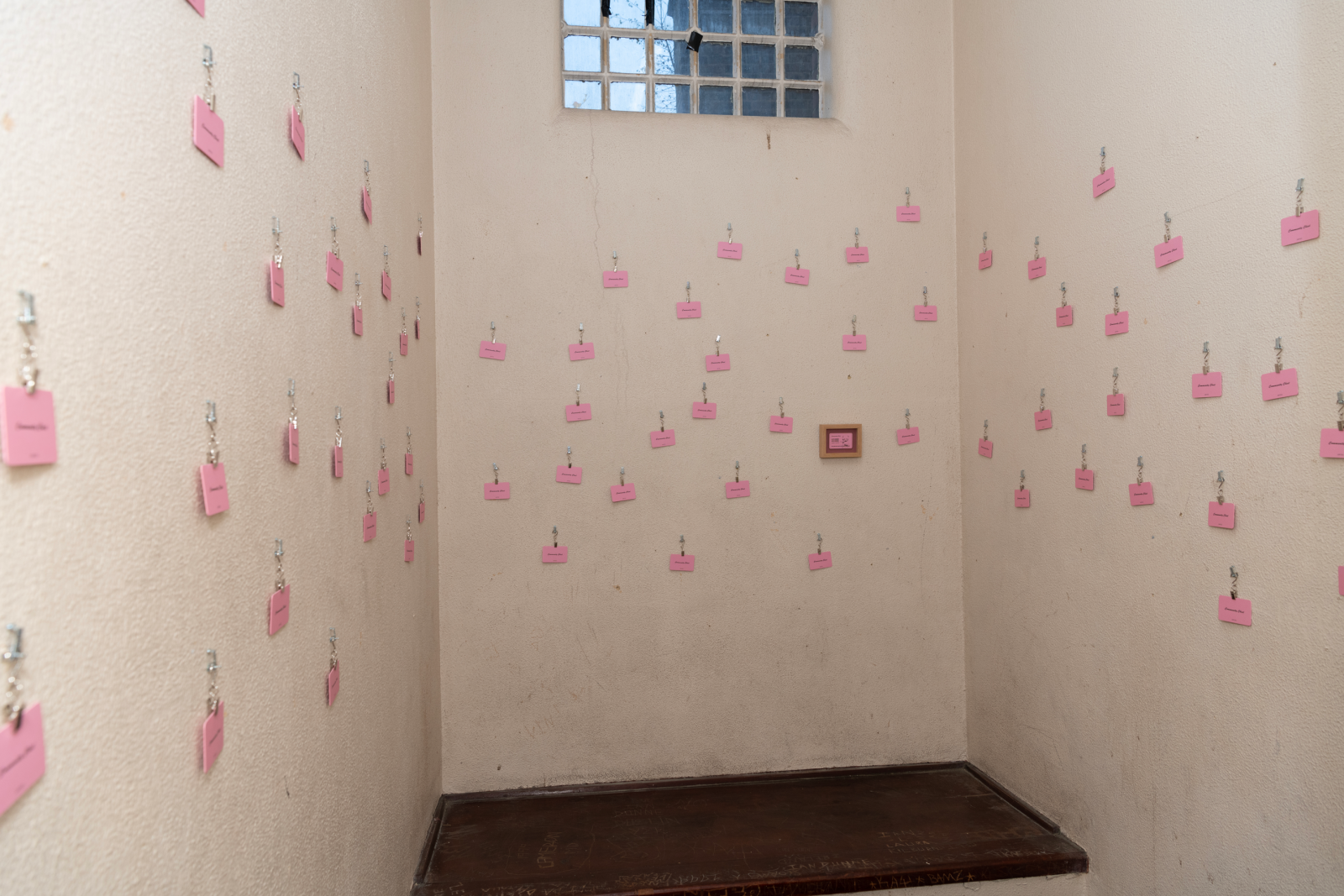
A second cell contained Community Chest Cards, a series of works borrowing the visual language and rules of a familiar board game. Experiences including depression, insomnia and panic attacks become events that can interrupt progress, while rest, affection and human connection offer opportunities to move forward. The structure introduces chance into an otherwise familiar model of personal development. Progress is no longer understood as a continuous movement towards an objective, but as something affected by circumstances that cannot always be anticipated or controlled.
Humour is important to this aspect of the work. The language of rewards, penalties and instructions reduces complicated emotional experiences to apparently simple consequences. A hug can become a reward, while the cost of therapy becomes a financial setback. The absurdity of these exchanges exposes the inadequacy of systems that attempt to measure personal experience through fixed outcomes. The game's familiar format creates an accessible point of entry, while its instructions reveal the uneven relationship between individual choice, circumstance and psychological wellbeing.
The former control room extended these ideas through original Oil Paintings and Screen Prints, including works such as Therapy Bill and Hug. Moving between the physical Installation and the works on paper and canvas, the project explored different ways of approaching the same experiences. The direct language of the printed cards contrasts with the more sustained process of Painting, allowing humour, vulnerability and reflection to occupy different forms within the wider body of work.
The police station's former function also introduced questions about the relationship between confinement and rehabilitation. Spaces designed to restrict movement do not necessarily provide the conditions for personal change, a contradiction LUAP considered while working within the building. By introducing The Pink Bear into this environment, Self Incarceration brings the institutional language of detention into contact with experiences of emotional restriction. The work does not present freedom as a simple matter of recognising an open door, but examines the more complicated process through which a person might become able to move towards it.