LUAP presents Self Incarceration, developed during a Residency inside a former police station in Hampstead. The Installation explores human caged potential and how fear, trauma and our own feelings can incarcerate us even when the possibility of escape remains open.
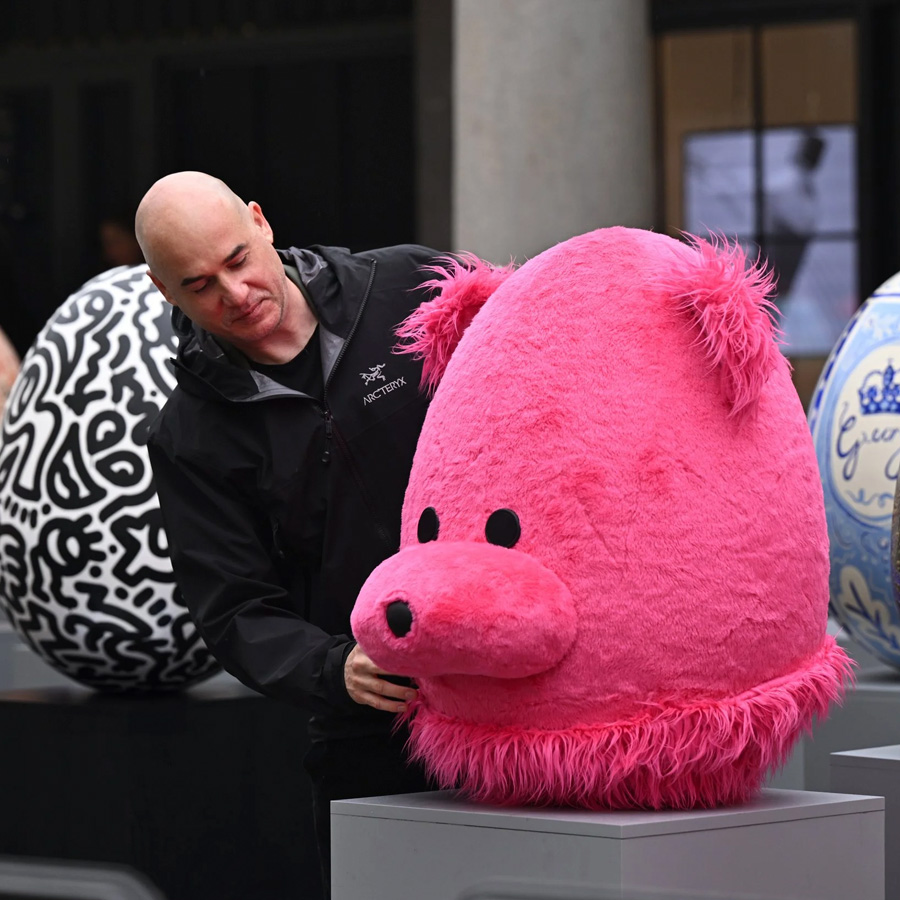
At the centre of Self Incarceration, a Pink Bear Sculpture stands inside a former police cell holding a cage. The entrance is blocked with real barbed wire, yet the cell door remains open. The contradiction is deliberate. Freedom is physically visible, but reaching it is another matter.
The title borrows directly from the language of prison. LUAP uses the cell, cage and barbed wire to give physical form to a more internal kind of incarceration. Feelings of helplessness, being lost or overwhelmed, unfamiliar situations and the effects of past trauma can become barriers that feel as difficult to cross as anything built from metal.
At its centre is the idea of human caged potential. Someone may have the ability, talent or opportunity to move forward, yet fear of the unknown can still hold them in place. The open door is important because the work is not about there being no way out. It is about the distance between an exit existing and feeling able to take it.
The barbed wire also brought an unexpectedly personal element into the making. LUAP used the material throughout the Installation and was repeatedly cut and scratched while installing it, creating an uncomfortable physical echo of an earlier period of self-harm. The connection remains part of the work’s material history without becoming its sole subject.
A second cell contains the Community Chest works, extending the same idea through the familiar structure of a board game. Depression, insomnia and panic attacks can send the player backwards, while rest, affection and connection allow movement forward.
The game structure introduces chance and circumstance into Self Incarceration. Life does not progress neatly in one direction, and not everything affecting our movement is chosen. Internal states can alter what feels possible from one moment to the next, while care, support or connection can create the conditions to move again.
Elsewhere in the former police station, the control room brings together Screen Prints and original Oil Paintings, allowing the ideas within the Installation to continue through different parts of LUAP’s practice. Rather than functioning as separate displays, the different spaces build on one another, moving from the physical confinement of the cell into images concerned with psychology, movement and the possibility of change.
The Pink Bear has a longer history within this psychological territory. The figure emerged through LUAP’s experience of Cognitive Behavioural Therapy and was initially connected to qualities of confidence and strength that he wanted to recover within himself. In earlier works, LUAP described The Pink Bear as “seeking friendship” while still feeling “lost and caged”. As his own confidence developed, the figure began moving beyond those boundaries and into wider encounters and landscapes.
Self Incarceration brings that history back into a literal place of confinement, but the open door prevents the Installation from becoming an image of permanent entrapment. The possibility of movement remains present. The harder question is what allows us to recognise it and step towards it.
The Installation is open at Koppel Cells, 56 Downshire Hill, London, from 24 to 27 November 2022